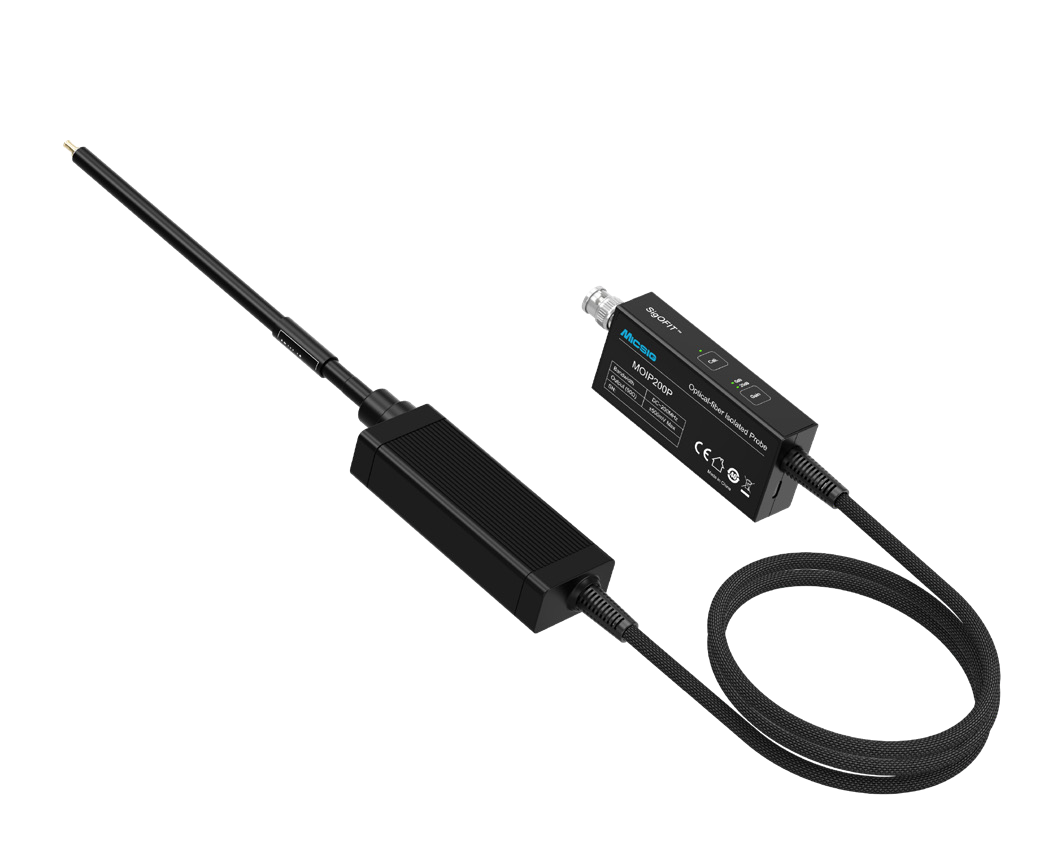
High-Speed Power Testing in the AI Computing Era: Micsig SigOFIT™ MOIP Optical-Fiber Isolated Probes for Data Center Power and Power Semiconductor Testing
Release Time:2026-09-02
Abstract
As AI computing continues to grow, server and data center power systems are evolving toward higher power density, greater efficiency, and faster dynamic response. Wide-bandgap power semiconductors such as SiC and GaN — with high switching speed, low losses, and high voltage withstand — are widely used in server power supplies, high-voltage DC-DC converters, energy storage, photovoltaics, new energy vehicles, and industrial power applications. As device switching speeds increase, testing involves high common-mode voltage, high dv/dt, fast switching edges, and low-amplitude gate signals. A probe’s bandwidth, common-mode rejection ratio (CMRR), input capacitance, and isolation capability directly determine the fidelity of high-speed power waveforms. Built on an electrical-optical-electrical isolation architecture with ADHOMT analog-digital hybrid laser modulation technology, the Micsig SigOFIT™ third-generation MOIP series optical-fiber isolated probes deliver high bandwidth, high CMRR, low input capacitance, automatic calibration, and wide-range measurement — providing a professional measurement solution for AI power and high-speed power semiconductor testing.
1. Test Requirements Driven by AI Power Upgrades
The power density of AI servers keeps rising, requiring data center power systems to operate stably at higher power levels, under faster load transients, and with higher conversion efficiency. Server power supplies, high-voltage DC distribution, DC-DC converters, and power modules all require verification of efficiency, dynamic response, reliability, and safety.
Across different power conversion stages, SiC is typically suited to high-voltage, high-power applications, while GaN fits medium/low-voltage, high-frequency, and high-power-density scenarios. Although AI power systems and power semiconductor devices are different test objects, both involve high-speed power conversion and therefore share the measurement challenges posed by fast edges, high common-mode voltage, and complex parasitics.
Engineers typically need to accurately observe:
• Gate drive voltage Vgs
• Switching-node voltage Vds
• Switching overshoot and ringing
• Gate plateau voltage
• Abnormal waveforms caused by drive timing and parasitic parameters
If the probe bandwidth is insufficient, high-frequency waveform details are filtered out; if high-frequency common-mode rejection is limited, common-mode transients can contaminate the measurement results; and if the input capacitance is too large, the probe may even alter the actual gate-drive and switching-node waveforms.
2. The Micsig SigOFIT™ MOIP Optical-Fiber Isolated Probe
To meet the combined requirements of high-speed edges, high common-mode voltage, and low input loading, a measurement probe must simultaneously provide fast response, strong common-mode rejection, and reliable electrical isolation. Optical-fiber isolated probes were developed precisely for these test scenarios.
Micsig SigOFIT™ is a core technology platform purpose-built for optical isolation measurement. Based on this platform, the MOIP series adopts an electrical-optical-electrical signal transmission architecture: the probe front end converts the measured electrical signal into an optical signal, transmits it over optical fiber to the receiver, and then restores it to an electrical output. Because the signal travels through a non-conductive fiber link, no direct galvanic connection is required between the circuit under test and the oscilloscope, helping to reduce the impact of common-mode current, ground loops, and electromagnetic coupling on measurement results.
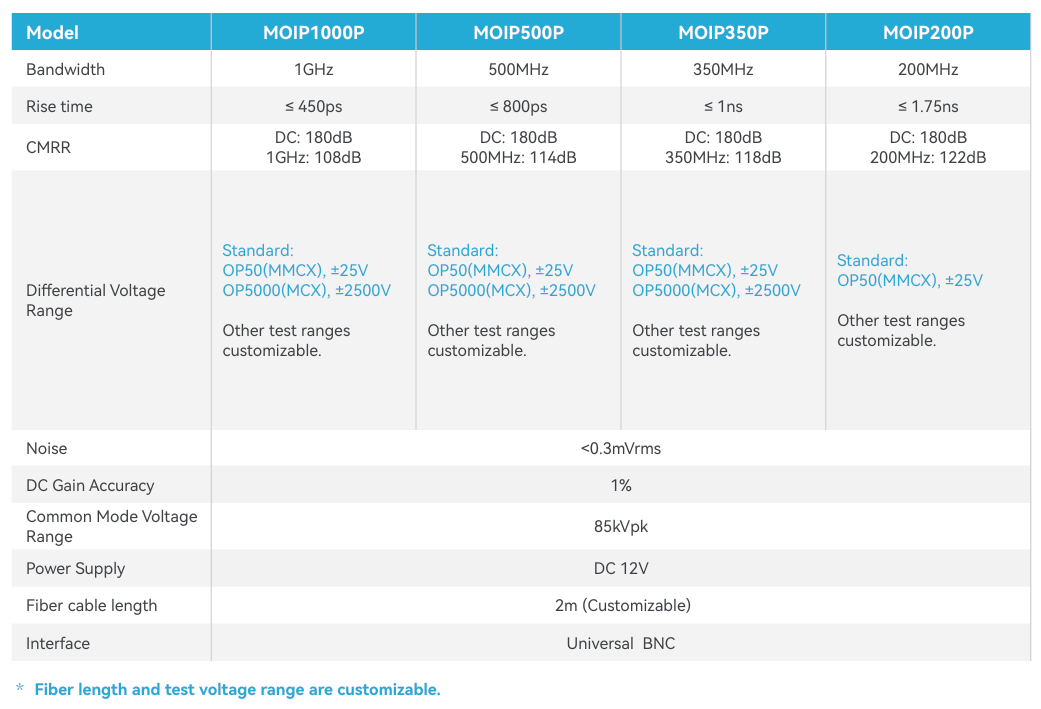
Key Specifications
The MOIP series supports pairing with different attenuator models. Standard attenuators cover differential-signal testing from ±0.01 V to ±20,000 V; with the optional ultra-high-voltage attenuator, inputs of up to 20 kVpk are supported, and other measurement ranges can be customized.
Attenuators differ in attenuation ratio, input impedance, and input capacitance; on some models the input capacitance is as low as 1 pF. The 85 kVpk rating applies to the fiber-link withstand voltage and does not represent continuous working common-mode voltage capability; actual operating conditions are subject to the product datasheet and safety manual.
3. Third-Generation ADHOMT Technology
Built on the SigOFIT™ technology platform, the third-generation MOIP series employs ADHOMT (Analog-Digital Hybrid Optical Modulation Technology), which monitors key parameters in real time and dynamically modulates the laser to improve measurement stability.
Power-On-and-Measure, No Manual Calibration
The MOIP series supports automatic calibration — it is ready to use at power-on, with no manual calibration required. This reduces test preparation and is well suited to R&D verification, repetitive testing, reliability testing, and long-duration continuous testing.
High CMRR for Better High-Speed Signal Measurement
The MOIP series maintains a high common-mode rejection ratio even at high bandwidth. Taking the MOIP1000P as an example, the CMRR still reaches 108 dB at 1 GHz, helping to reduce the influence of high-frequency common-mode noise and transient interference on measured signals.
Low Input Capacitance for Reduced Measurement Loading
With input capacitance as low as 1 pF on some attenuators, the probe minimizes the extra loading on GaN/SiC gate-drive loops and high-speed switching nodes, reducing the impact of the measurement on the waveforms under test.
0 dB / 20 dB Dual Gain Ranges
The MOIP series supports switching between 0 dB and 20 dB ranges. By matching different attenuators and ranges, users can flexibly select the measurement range according to the amplitude of the signal under test, balancing range and signal-to-noise ratio for both small-signal and high-voltage measurements.
4. Typical Applications
1) AI Power System Testing
Suited to server power supplies, 800 VDC-related power modules, high-voltage DC-DC converters, and power rack testing.
The MOIP series can be used to observe high-speed switching waveforms, dynamic response, overshoot, and ringing, assisting engineers with power topology optimization, device selection, efficiency analysis, and reliability verification.
2) SiC / GaN Power Semiconductor R&D
Suited to dynamic characterization of SiC MOSFETs, GaN HEMTs, and their drive circuits, including:
• Vgs gate drive voltage
• Vds switching-node voltage
• Switching speed and dead time
• Switching overshoot and ringing
• Drive-loop and parasitic analysis
3) Power Electronics Equipment Testing
Applicable to inverters, UPSs, switching power supplies, motor drives, power converters, and IGBT half-bridge and full-bridge equipment; also useful for floating measurements, EMI/ESD troubleshooting, and high-voltage, high-bandwidth isolated testing.
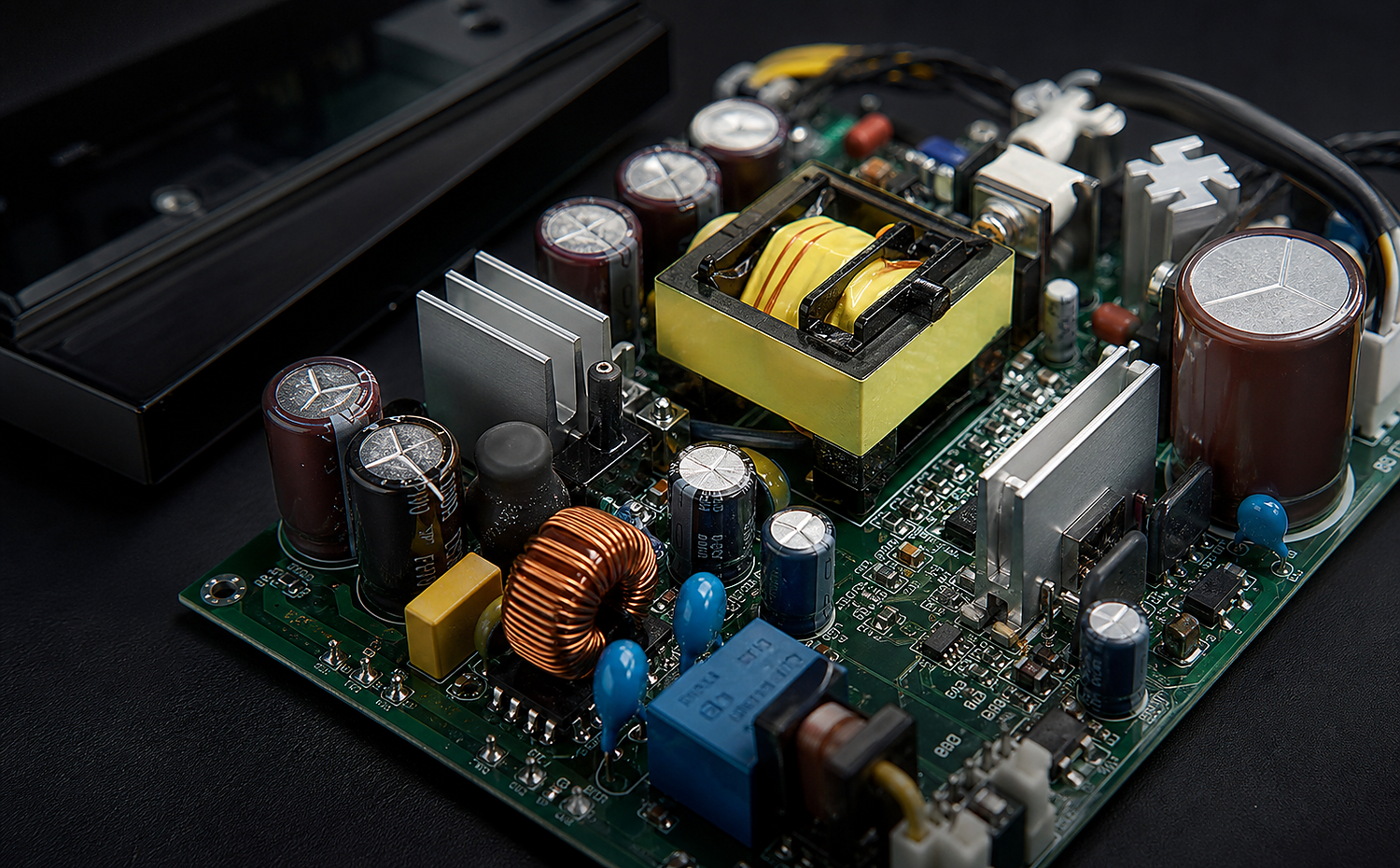
4) Failure Reproduction and Failure Analysis
When a power module or power device behaves abnormally, the MOIP series can capture key voltage waveforms such as Vgs and Vds; combined with current-probe or shunt measurements, it helps analyze drive anomalies, false turn-on, parasitic oscillation, switching overshoot, PCB layout issues, and device failures.
5. Conclusion
The growth of AI computing is driving data center power systems toward higher power density and faster dynamic response, and expanding the adoption of SiC, GaN, and other power semiconductors across more power conversion applications.
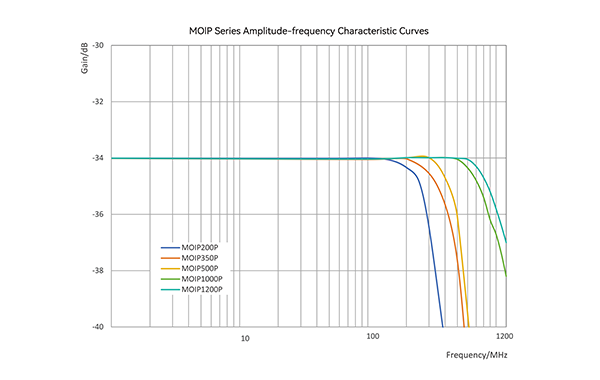
The Micsig SigOFIT™ MOIP series optical-fiber isolated probes, built on the SigOFIT™ optical isolation platform and incorporating ADHOMT analog-digital hybrid laser modulation technology, deliver 200 MHz to 1.2 GHz bandwidth, a CMRR of up to 108 dB at 1 GHz, input capacitance as low as 1 pF, automatic calibration, and flexible attenuator configuration.
From AI power systems to SiC/GaN power semiconductor R&D, and on to renewable energy and industrial power testing, the MOIP series provides a stable and flexible optically isolated measurement solution for high-speed, high-voltage power testing.